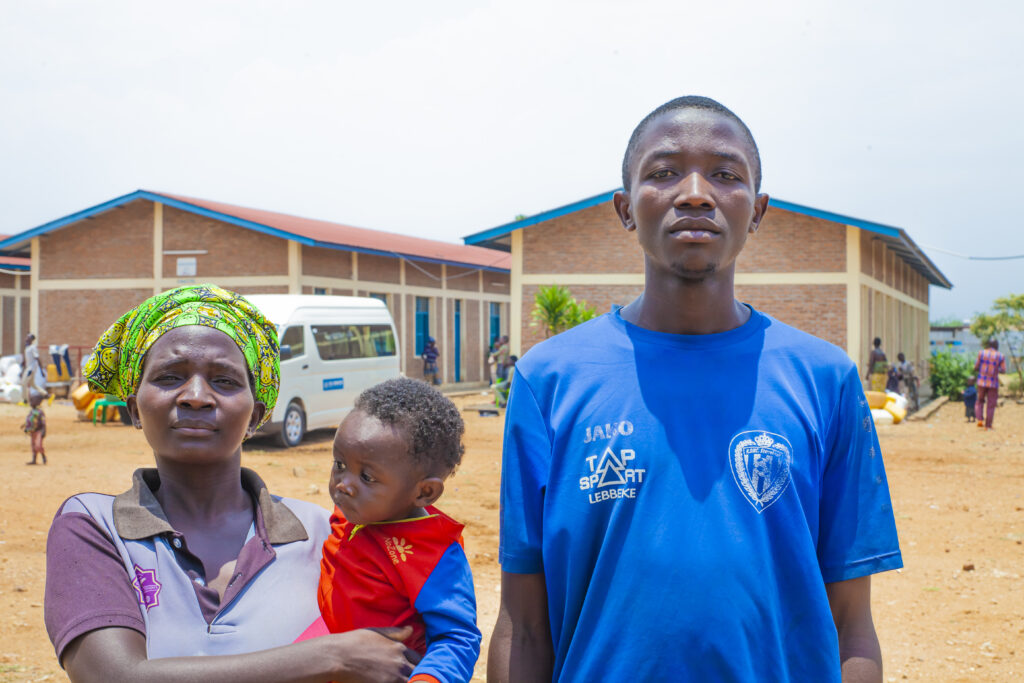
In 2023, the Nzoyikorera family, originally from Ndava in the former province of Cibitoke, made a difficult decision to leave Burundi and seek refuge in the Democratic Republic of Congo. This choice was not driven by a mere desire for change, but by an accumulation of suffering, threats, and despair. This story retraces their path through exile, the trials they endured, and the hope they found again through voluntary repatriation.
Rubin Nzoyikorera, 25 years old, is a hardworking man deeply attached to his native land. Married to Odette Ntakirutimana, also 25, they are the parents of three young children. Before their departure, their life was shaped by the rhythm of agricultural seasons and caring for animals. They lived from tomato farming, raising poultry and small livestock. Although modest, this lifestyle allowed them to meet their family’s needs and dream of a better future.
But in 2023, everything changed. Climate disruption struck their region hard. Irregular rains, long droughts, and plant diseases destroyed their tomato fields. These crops had been financed through a loan from a friend who was an entrepreneur. Rubin had hoped to repay it quickly, but the agricultural losses made that impossible.
“The situation was so difficult that even repaying the loan became a nightmare,” he says sadly.
On top of the economic crisis came a series of disturbing threats. Rumors began to circulate, intimidation escalated, and even cases targeting their children were reported. Rubin and Odette realized their environment was no longer safe.
“I felt this place was no longer ours. The fear, the threats, the repeated failures… all of it gave us a thousand reasons to flee,” Rubin recounts.
They decided to leave for the DRC, crossing illegally through Uvira. Their hope was simple: to find fieldwork, feed their children, and rebuild their lives far from danger. But once they arrived, reality hit hard. Insecurity reigned, opportunities were scarce, and living conditions were harsh.
Rubin learned about the Mulongwe Refugee Camp in South Kivu. And took his family there. They found shelter, food, and above all, familiar faces.
However, Rubin couldn’t stop thinking about Burundi. He worried about his children’s education, their civil status, and their future. Regret filled him every time he thought of his homeland and what he had left behind. He knew that exile, despite humanitarian aid, was not a place to build lasting dreams.
When the African Initiatives for Relief and Development (AIRD) launched a call for voluntary repatriation, Rubin didn’t hesitate. Rubin and his family returned to Burundi empty-handed but with hearts full of hope. Thanks to the reintegration package provided by humanitarian organizations, they felt at home again. This support was essential to regain their footing in the community, to find their place, and to begin dreaming once more.
Today, Rubin looks to the future with determination. He wants to rebuild his life, provide education for his children, and share his experience with others facing similar hardships.
His story is one of resilience in the face of adversity. It highlights the importance of solidarity, and the support of humanitarian organizations like UNHCR, AIRD, Save the Children, and many others.
Rubin does not see himself as a victim, but as a survivor. He carries the scars of exile, but also the seeds of hope.
“I am deeply grateful to those who extended a hand to us. Thanks to them, we regained our dignity. And now, it’s up to us to build, to sow, and to harvest.”