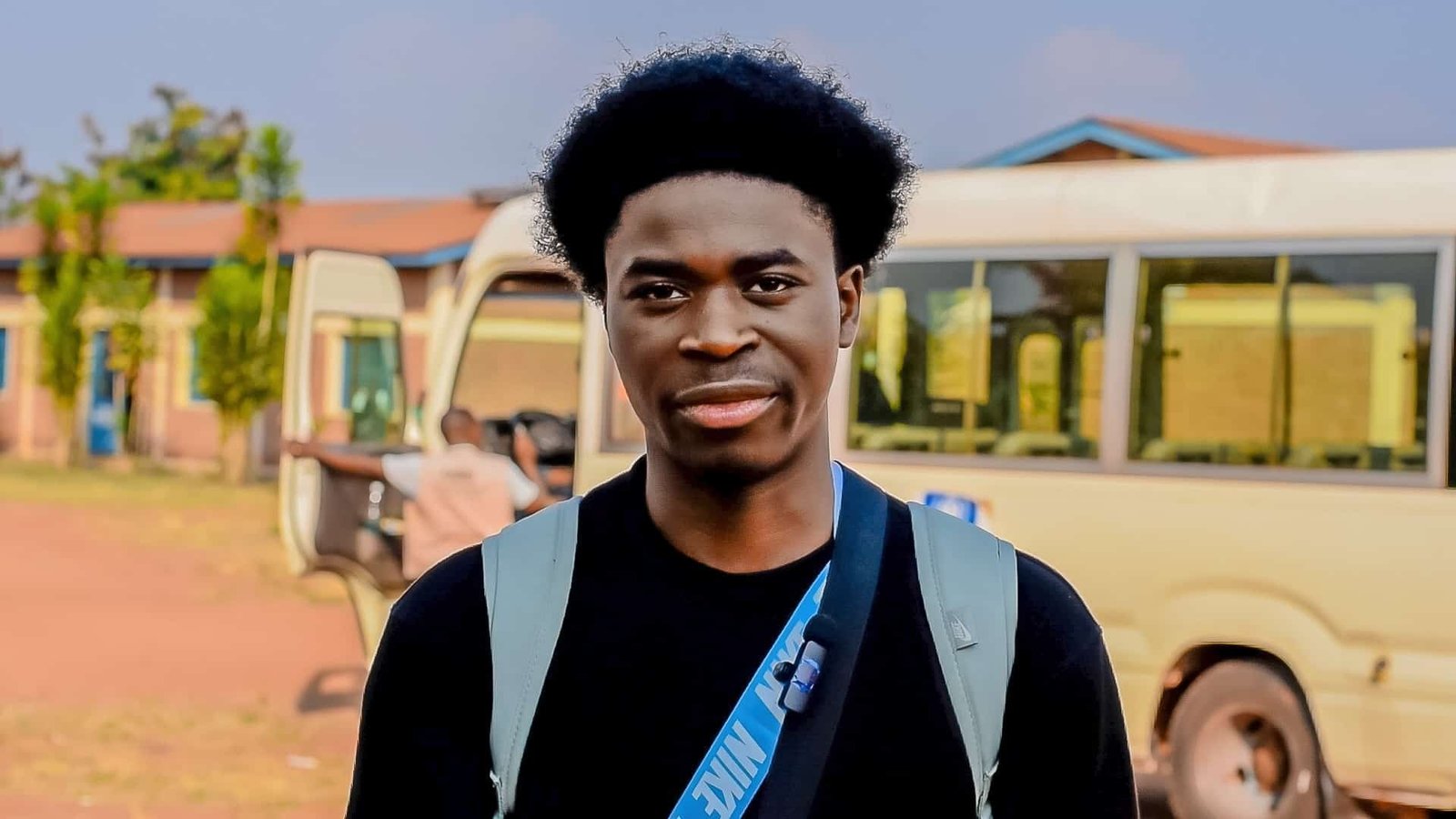
After spending fourteen years in exile in South Africa, 19-year-old Fawume finally returns to his homeland.
He was still very young when he left Burundi with his family. In South Africa, he grew up far from his country of origin, in an environment where English was part of his daily life. Over the years, he created memories, learned to adapt, and developed part of his identity there.
However, insecurity and violence targeting people from other countries made his life increasingly difficult. Like many other foreigners facing insecurity, Fawume had to leave South Africa and begin the journey back home.
Upon his arrival in Burundi, he was welcomed at the Gihanga Transit Centre, under AIRD’s responsibility. He stayed there for only two days, but this brief stopover meant a great deal to him. It was here that he began reconnecting with his fellow countrymen and gradually discovering a country he had left when he was still a child.
At the centre, Fawume also met people repatriated from the Democratic Republic of the Congo after more than ten years in exile. Their stories were different. Some had spent many years in an environment where Kiswahili was the main language of communication, while Fawume had grown up in South Africa, in a predominantly English-speaking context.
Despite these linguistic differences and their very different journeys, they were able to understand one another. A few words, gestures and smiles were enough to create a connection. They all shared a common experience: living far from their country, facing uncertainty and now having to rebuild their lives.
During his stay at the centre, Fawume also met young children he had never known before. They approached him with curiosity. Some watched him silently, while others smiled or tried to attract his attention.
Wearing his black sweater, Fawume stood among them. He leaned towards the children and gave them his full attention. In this simple scene, he no longer appeared to be only a young man repatriated after years of exile. He became like an older brother a new face inspiring curiosity and trust.
As he watched the children, Fawume seemed to reconnect with a part of his own childhood. Their smiles and games brought back memories he may have thought were forgotten. After fourteen years away from Burundi, this encounter reminded him of the ties that connect him to his country and his community.
Surrounded by children, amid the greenery and the centre’s buildings, Fawume appears to be a young man standing between two periods of his life: a past marked by exile and an uncertain future in his homeland.
His stay in Gihanga lasted only two days, but it gave him time to be welcomed, listened to and connected with others. With AIRD’s support, repatriated people receive assistance that goes beyond material support. They also find a space where their stories are heard and their dignity is respected.
At Gihanga, differences in language, age, and personal experience do not divide people. Instead, they show that every return has its own story. Fawume comes from South Africa. Others arrive from the Democratic Republic of the Congo. Yet they all share the same hope: to regain stability and rebuild their future.
Fawume’s return does not mean that the years of exile have disappeared. They are now part of his story. But among the children and alongside his fellow countrymen, he is beginning to write a new chapter in his life.
Through Fawume, the story of many repatriated young people is also being told: people who grew up far from their country but who, upon returning, seek to reconnect with their identity, their community and their future. At the Gihanga Transit Centre, with AIRD’s support, this new chapter begins with a simple gesture: meeting one another, listening to one another and recognising their shared humanity.