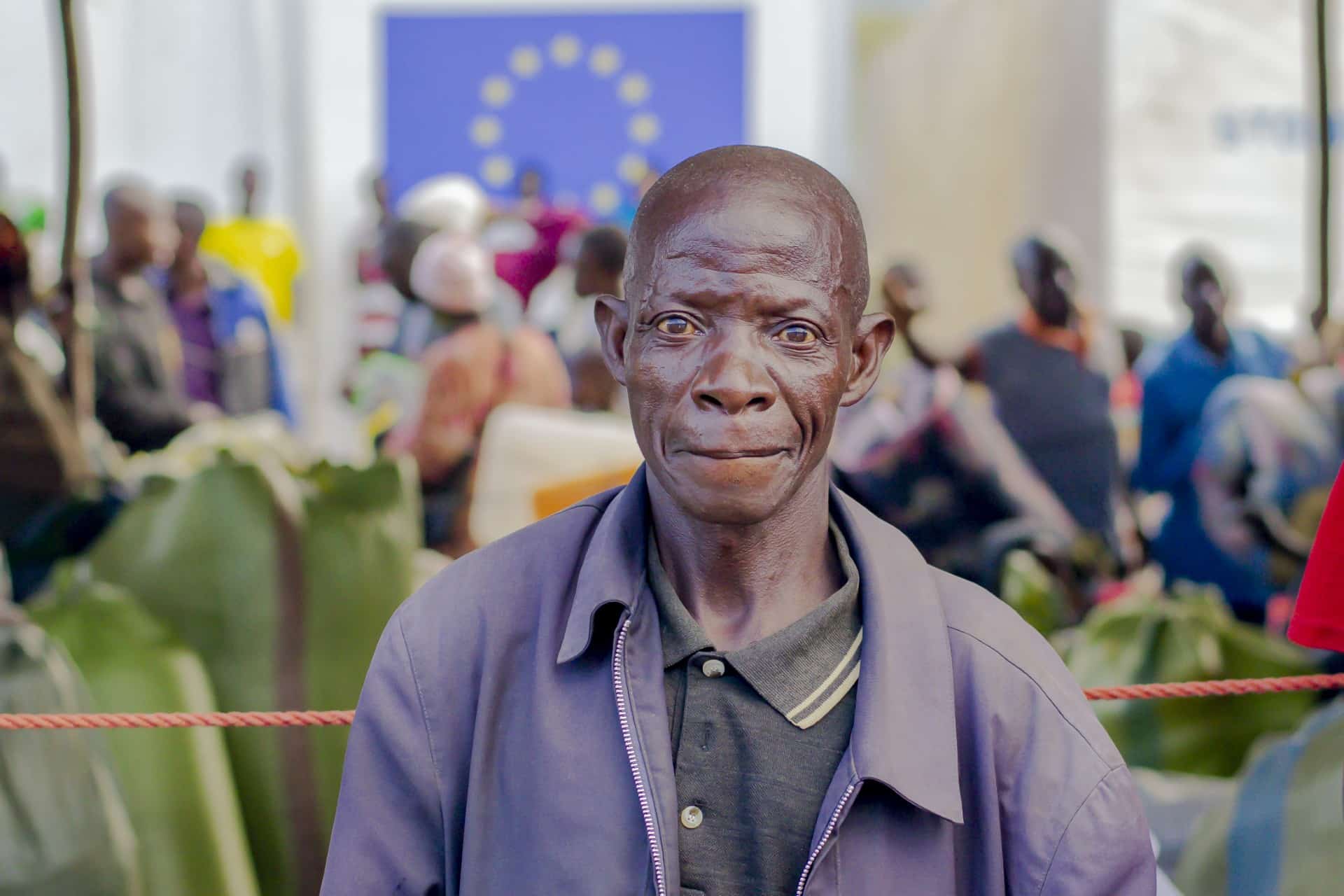
For months, Baya Beca carried the quiet weight of separation.
At 55, the Congolese father had been living in Busuma camp in Burundi’s Ruyigi zone since December 2025, far from everything that defined his life: his wife, Mwajuma Batuma, and their six children. Like thousands of others displaced by conflict, Baya’s days were marked by uncertainty, but his hope never wavered. He held on to one vision: to return home and rebuild his family.
That moment has finally come. As one of the approximately 66,000 Congolese refugees hosted at Busuma, Baya recently made the courageous decision to voluntarily repatriate to the Democratic Republic of Congo. For him, this is not just a journey across borders; it is a journey back to belonging, dignity, and purpose.
“I am overjoyed to reunite with my loved ones,” Baya shares with a smile that reflects both relief and anticipation. “I am deeply thankful to UNHCR and AIRD for every step that makes this possible.”
Behind this deeply personal milestone lies a coordinated humanitarian effort designed to ensure that returns are safe, informed, and dignified.
From the very beginning, Baya received counseling to help him make a voluntary and well-informed decision about returning home. Once ready, the process was seamlessly organized, right through to transportation across the border.
AIRD played a critical role in this journey. Through its expertise in humanitarian logistics, AIRD ensured that Baya and many others like him could travel safely and with dignity. From deploying a reliable fleet for transportation from Busuma camp to coordinating fuel supply for partner vehicles, every detail was carefully managed to support a smooth and efficient repatriation process.
These efforts are especially crucial in high-volume return operations, where coordination, safety, and timeliness can make all the difference.
For Baya, it means something simple, yet profound: going home. His return also reflects a broader impact. As families voluntarily repatriate, pressure on refugee sites like Busuma is reduced, while communities in eastern DRC begin to rebuild and recover. Each journey home contributes to restoring stability, not just for individuals, but for entire regions. Baya’s story is one of resilience, hope, and the power of coordinated humanitarian action. After months apart, a father is finally going back to his family.
And with every kilometer traveled, he is not just closing the distance; he is reclaiming his future.